
Focus On
- All
- Climate Change
- A Nation's Success or Failure
- What is Life?
- International Politics
- The Philosophy of Living
- WAR
- Neuroscience
- Management: The Survival Strategy
- All About the Universe
- Nobel Minds: Insights from Six Laureates
- Sustainable Environment: Saving Mother Nature
- TO BE FREE
- Understanding Money
- The Ideal Path for Humanity
- A Future Created by AI
This playlist features an opportunity to experience enlightening lectures from six eminent Nobel laureates at the top of their fields.
- What is Life?
- The World Economy Post-COVID
- The Power of Money
- Biography of the Universe
- Platform Companies: Empires with Secrets
- Universal Basic Income: Antidote or Poison?

What is Life?
The frontline of modern biology, searching for the definition of life

Paul Nurse
As an educator, he is committed to developing ”good” scientists, by which he means ones with a passion to find the answer to questions, with good technical abilities, and with a certain set of attitudes, including self-criticism and open-mindedness. Paul Nurse was awarded the French Legion d’Honneur and has advised the UK Prime Minister and the Cabinet for fifteen years.

The World Economy Post-COVID
In March of 2020, the world experienced the shock of the COVID-19 outbreak. The world economy was thrown into an unprecedented crisis, and governments and central banks proposed various policies to overcome it. How will the world economy change after the COVID-19 pandemic? Will extreme inflation really devastate counties around the world?

Paul Krugman
He became internationally renowned for his predictions of the 1997 Asian financial crisis and the 2007 U.S. subprime mortgage crisis. Noted for his strong opinions and emphatic tone used while criticizing his counterparts, Krugman was also listed among the 50 Most Influential Economists by IDEAS / RePEc. Paul Krugman is considered the most prolific writer in economics since John Maynard Keynes and has been actively involved in writing articles for The New York Times since 2000.

The Power of Money
A lifelong economist’s perspective: “How to understand the economy through the lens of money”

Thomas Sargent
Thomas Sargent is a macroeconomist and expert in monetary economics. In 2011, he received the Nobel Prize in Economic Sciences for furthering the development of the rational expectations theory, which greatly affected the field of macroeconomics.
The theory of rational expectations suggests that it is difficult for the government to achieve its desired effects no matter what economic policy is implemented because people make rational judgments by utilizing all sources of information. This theory suggests a new framework for analyzing changes in government policy and points out the limitations of the Keynesian Economics, which claims that the government can control unemployment, prices, and gross domestic product (GDP). This marked the end of the Keynesian era of economic thought.
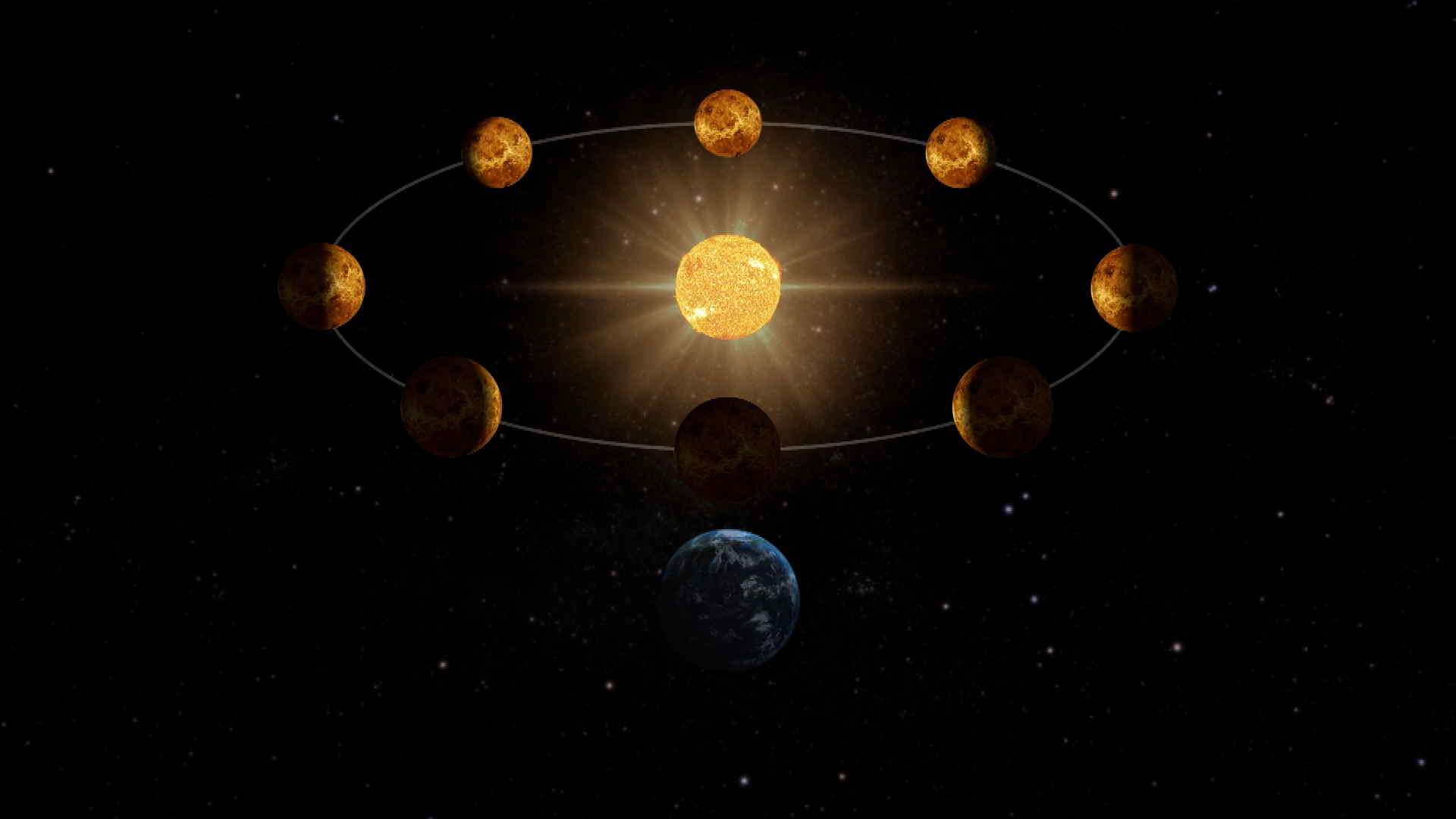
Biography of the Universe
The History of Astronomy and the Future of the Universe
Brian Schmidt
Australian astrophysicist Brian Schmidt has been the Vice-Chancellor of The Australian National University since 2016. He graduated with a BS in physics and astronomy from the University of Arizona and received an MA and PhD in astronomy from Harvard University. In 1993, under the tutelage of Professor Robert Kirshner, he came into the spotlight in academia with his doctoral thesis on measuring the Hubble Constant using Type II Supernovae.
After his postgraduate study, he served as a postdoctoral research fellow at the Harvard-Smithsonian Center for Astrophysics until 1994. In 1995, he formed the High-Z Supernova Search Team to study supernovae at the Mount Stromlo Observatory, the headquarters of The Australian National University Research School of Astronomy and Astrophysics. Eventually, the team used data on a five-billion-year-old Type Ia supernova to present early evidence that the universe’s expansion rate was accelerating. For this accomplishment, he was jointly awarded the Nobel Prize in Physics in 2011.

Platform Companies: Empires with Secrets
Take a look at the dark truth of the brave new world that transformed and innovated our daily lives with Jean Tirole.

Jean Tirole
Jean Tirole is a professor of economics at Toulouse 1 Capitole University and the scientific director of the Toulouse Industrial Economics Institute (IDEI). He began studying corporate regulation theories in the mid-1980s and is unrivaled in the field of corporate monopoly research.
Tirole focused on researching business-oriented regulations rather than advocating unconditional ones, categorized the types of monopoly firms, and developed a model for how a firm should set prices for its products. His work has been greatly influential in developing government responses to monopolist expansion by giant corporations.
Tirole won the European Economic Association’s Yrjö Jahnsson Award in 1993, French CNRS’s Gold Medal in 2007, and the Nobel Memorial Prize in Economics in 2014 for his analysis of the regulation of natural monopolies.

Universal Basic Income: Antidote or Poison?
With an increasing number of people struggling financially due to the pandemic, the topic of universal basic income, or UBI, has been gaining popularity. But what exactly is universal basic income? Is it the silver bullet to improve everyone’s standard of living?

Esther Duflo
Esther Duflo is an American economist who was given tenure as an associate professor at the young age of 29. She had been interested in helping those less fortunate since she was a child, and she saw becoming an economist who advises governments as a way to fight against poverty.
Traveling to more than forty countries for the past twenty years, she has researched poverty at the local level and presented solutions based on unique scientific experiments to tackle the difficult questions. For this experimental approach to alleviating poverty, she became the youngest recipient of the Nobel Prize in Economics at age 46 in 2019. She’s also an accomplished author of such internationally-acclaimed works as 'Poor Economics' and 'Good Economics for Hard Times'.
Service Change Notice
As of April 3, 2024, GREAT MINDS is now operated by Ubion CO LTD.
As a result, there is a change in membership, so We’re informing you.
Discontinuation of Membership Subscription Auto-Renewal
Memberships subscribed before April 3rd will not automatically renew and will expire. Therefore, if you wish to continue using the membership, please proceed with the subscription after the expiration of the subscription.Increase in Membership Subscription Prices
The prices of membership subscriptions have been increased due to rising labor and material costs. We sincerely appreciate your understanding regarding this price adjustment.| Before | After | |
|---|---|---|
| Monthly Membership | $ 4.99 | $ 9.99 |
| Annually Membership | $ 49.99 | $ 99.99 |
* The won price of the monthly/annual membership for Koreans has risen to 12,000 won and 120,000 won, respectively.
Thank you for your understanding
If you have any further inquiries, Contact Us
Service Update
Global lecture, G is becoming Grecture.
Expanded AI feature are powering the next evolution of the service.
Effective January 2, 2026
Domain: https://www.grecture.com
Automatic redirection will be provided.
Subscription:
Price changes from $9.99 to $15.
Auto-renewal will end. Please resubscribe to continue.
Thank you for being with us.