
Economy
Esther Duflo
Universal Basic Income: Antidote or Poison?
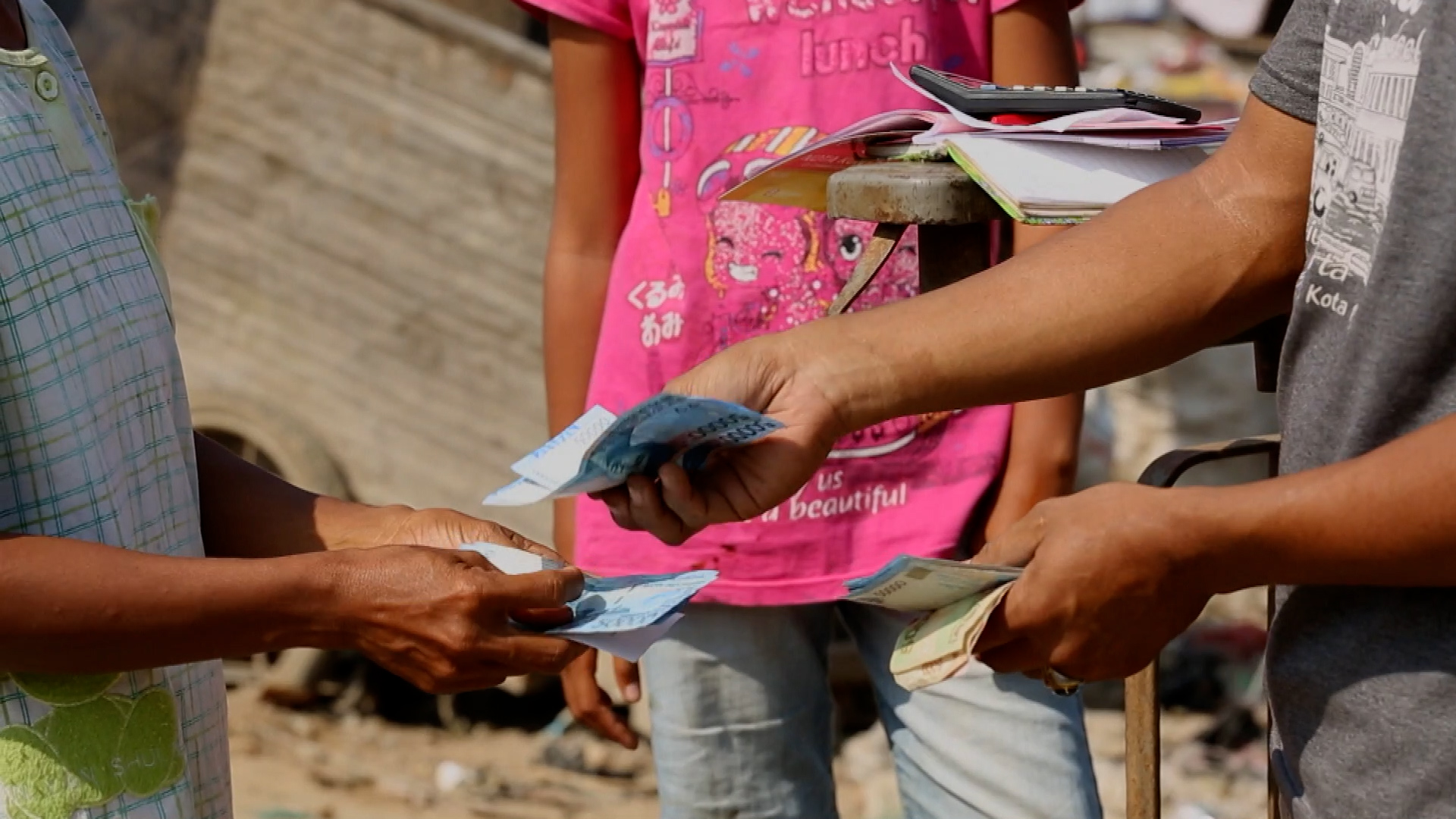
With an increasing number of people struggling financially due to the pandemic, the topic of universal basic income, or UBI, has been gaining popularity. But what exactly is universal basic income? Is it the silver bullet to improve everyone’s standard of living?
Lesson Plan
- Lesson Length : 5 Lessons ㆍ 1 hours 14 miutes
- Language : 한국어, English, 简体中文, Spanish, French, 日本語
Does universal basic income make people lazy?
As a long-time expert on poverty and inequality, Esther Duflo emphasizes the need for universal basic income in this lecture series, providing evidence from various experiments, extensive surveys, and historical events. She also corrects some of the basic misunderstandings and unfounded beliefs regarding UBI and explains the difficulties of achieving political consensus and of wealth redistribution itself.
She also shares her opinions on country-specific solutions to improving welfare systems and securing public support in these uncertain times of a pandemic, global warming, the rise of artificial intelligence, and trade wars. Finally, she emphasizes that in order to overcome poverty, we must see the world from the perspective of the poor and feel a sense of connectedness with their struggles.
In Esther Deflo’s lecture series, “Good Economics for Hard Times,” will offer straightforward answers to questions on universal basic income and act as a guide to implementing an ideal welfare system to lift millions out of poverty.
Full Bio
Esther Duflo
- Professor of Economics at the Massachusetts Institute of Technology
- Nobel Prize in Economic Sciences (2019)
- Princess of Asturias Award for Social Sciences (2015)
- Dan Davis Prize (2013)
- John Bates Clark Medal (2010)
- Best Young Economist of France Award (2005)
- Co-author of 'Poor Economics' and 'Good Economics for Hard Times'
Esther Duflo is an American economist who was given tenure as an associate professor at the young age of 29. She had been interested in helping those less fortunate since she was a child, and she saw becoming an economist who advises governments as a way to fight against poverty.
Traveling to more than forty countries for the past twenty years, she has researched poverty at the local level and presented solutions based on unique scientific experiments to tackle the difficult questions. For this experimental approach to alleviating poverty, she became the youngest recipient of the Nobel Prize in Economics at age 46 in 2019. She’s also an accomplished author of such internationally-acclaimed works as 'Poor Economics' and 'Good Economics for Hard Times'.

Other Series in
Economy

Service Change Notice
As of April 3, 2024, GREAT MINDS is now operated by Ubion CO LTD.
As a result, there is a change in membership, so We’re informing you.
Discontinuation of Membership Subscription Auto-Renewal
Memberships subscribed before April 3rd will not automatically renew and will expire. Therefore, if you wish to continue using the membership, please proceed with the subscription after the expiration of the subscription.Increase in Membership Subscription Prices
The prices of membership subscriptions have been increased due to rising labor and material costs. We sincerely appreciate your understanding regarding this price adjustment.| Before | After | |
|---|---|---|
| Monthly Membership | $ 4.99 | $ 9.99 |
| Annually Membership | $ 49.99 | $ 99.99 |
* The won price of the monthly/annual membership for Koreans has risen to 12,000 won and 120,000 won, respectively.
Thank you for your understanding
If you have any further inquiries, Contact Us
Service Update
Global lecture, G is becoming Grecture.
Expanded AI feature are powering the next evolution of the service.
Effective January 2, 2026
Domain: https://www.grecture.com
Automatic redirection will be provided.
Subscription:
Price changes from $9.99 to $15.
Auto-renewal will end. Please resubscribe to continue.
Thank you for being with us.