
Focus On
- All
- Climate Change
- A Nation's Success or Failure
- What is Life?
- International Politics
- The Philosophy of Living
- WAR
- Neuroscience
- Management: The Survival Strategy
- All About the Universe
- Nobel Minds: Insights from Six Laureates
- Sustainable Environment: Saving Mother Nature
- TO BE FREE
- Understanding Money
- The Ideal Path for Humanity
- A Future Created by AI
How can we create a desirable and sustainable future for us to live in? Concrete and reasonable courses of action for humanity's salvation from the world’s greatest minds in the face of human crises of economic inequality, political polarization, the COVID pandemic, and climate change.
This special series sets out the path to save humanity - and perhaps even helps us find happiness and meaning in life.
- Sustainable Development
- How to Save Humanity: The Economy of Life
- Universal Basic Income: Antidote or Poison?
- Why the World Still Goes Hungry
- Why Nations Fail
- The World Economy Post-COVID
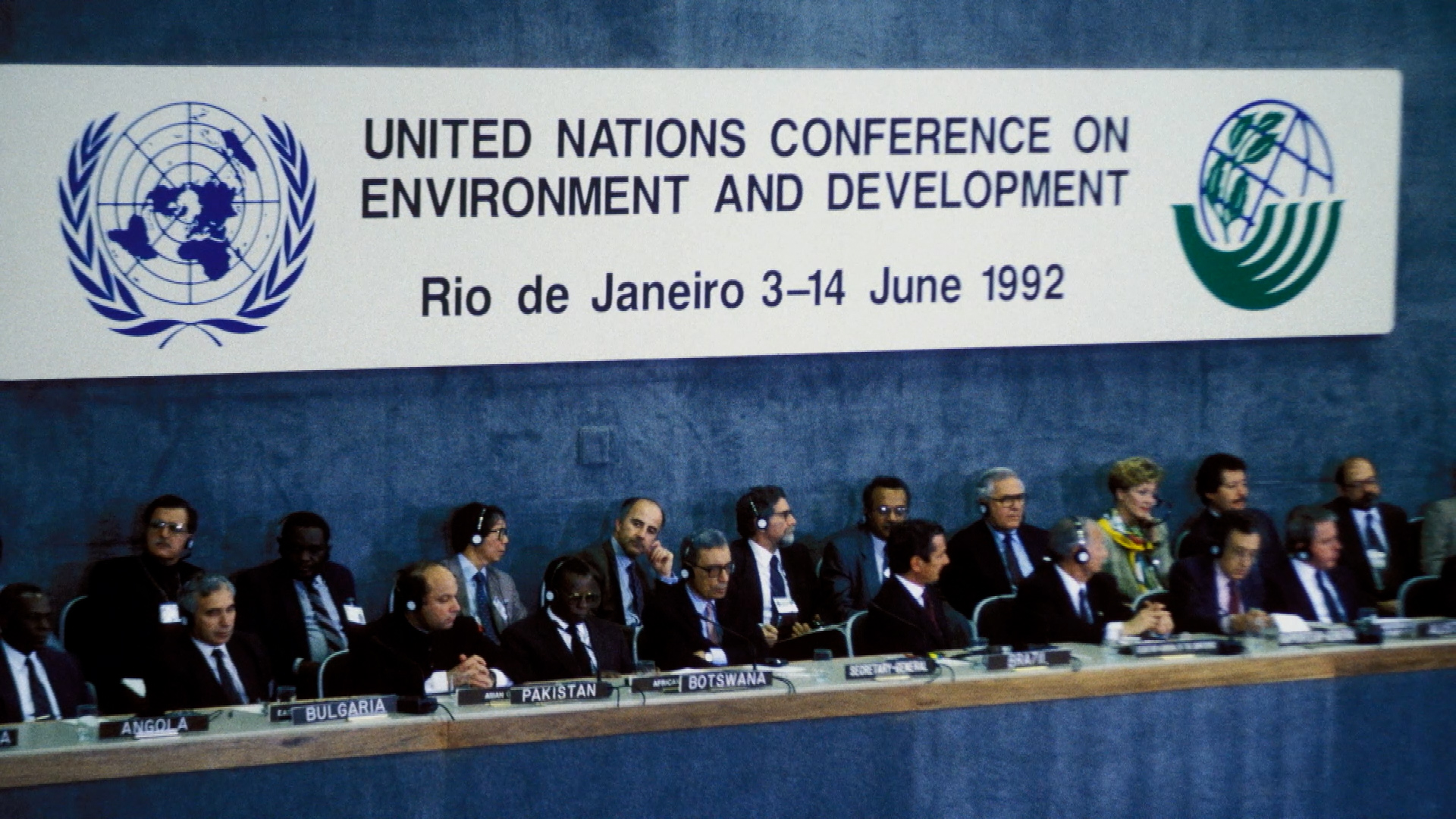
Sustainable Development
A global crisis just ten years away. Do our world leaders have a solution?

Jeffrey Sachs
Jeffrey Sachs is a professor of economics at Columbia University and President of the UN Sustainable Solutions Network. As a long-time leading scholar in the field of economics, he has served as an advisor to such international organizations as the IMF, World Bank, UNDS, and OECD. Jeffrey Sachs built a reputation as a leading macroeconomist as he helped Bolivia navigate economic hardships in their transition from a dictatorship to a democracy. Thanks to his suggestions, its out-of-control inflation quickly stabilized to ten percent in just one year. Later on, he served as Special Advisor on Sustainable Development Goals at the United Nations Conference on Sustainable Development, working on such problems as climate change and the destruction of biological diversity.
The New York Times described his as “probably the most important economist in the world,” and TIME recognized him as one of “The 100 Most Influential People” in the world in 2004 and 2005. His publications include The End of Poverty, The Age of Sustainable Development, and The Ages of Globalization: Geography, Technology, and Institutions.

How to Save Humanity: The Economy of Life
Why do we constantly need such precise predictions of the future? One of Europe’s greatest scholars, Jacques Attali, has been predicting events such as the current pandemic for some twenty years. This capacity to accurately see the future has made him an international leader in the academic community of the political economy.

Jacques Attali
Jacques Attali is a French economist and futurologist who has served as special advisor to French President Mitterand and as President of the European Bank for Reconstruction and Development. He is also the President of the General Management Committee and the Supervisory Board of the Positive Planet Foundation, a non-profit organization that works to alleviate poverty. With a plethora of experiences as a professor, politician, and government official, he guides many international organizations with his extensive knowledge and insights.
He has also published Dictionnarie du 21e Siecle (Dictionary of the 21st Century) and other books with analyses and predictions of future society, giving him a greater platform and reputation as a futurologist. His foresight even allowed him to predict the onset of more pandemics decades before the current one. Called 'one of Europe's greatest scholars', Jacques Attali not only predicts our future but also suggests the best way to approach it.

Universal Basic Income: Antidote or Poison?
With an increasing number of people struggling financially due to the pandemic, the topic of universal basic income, or UBI, has been gaining popularity. But what exactly is universal basic income? Is it the silver bullet to improve everyone’s standard of living?

Esther Duflo
Esther Duflo is an American economist who was given tenure as an associate professor at the young age of 29. She had been interested in helping those less fortunate since she was a child, and she saw becoming an economist who advises governments as a way to fight against poverty.
Traveling to more than forty countries for the past twenty years, she has researched poverty at the local level and presented solutions based on unique scientific experiments to tackle the difficult questions. For this experimental approach to alleviating poverty, she became the youngest recipient of the Nobel Prize in Economics at age 46 in 2019. She’s also an accomplished author of such internationally-acclaimed works as 'Poor Economics' and 'Good Economics for Hard Times'.

Why the World Still Goes Hungry
The 21st century is called the era of abundance, and the amount of food wasted is unfathomable. So why hasn’t hunger gone away? And why has the gap between the rich and poor increased? Eliminating hunger is the assignment given to humanity that should have been completed by now. To Jean Ziegler, there’s only one way to see this abdication of duty: “A child dies from hunger every five seconds. Every child who dies from hunger is a child murdered.”

Jean Ziegler
Jean Ziegler is a practicing sociologist who has fought to eradicate famine for more than half a century. He is a former professor of sociology at the University of Geneva and the Sorbonne, Paris, who served as the vice-president of the Advisory Committee to the United Nations Human Rights Council.
While serving as a member of the Swiss Parliament, he published a book, Swiss Whitewash, and exposed the realities of Swiss banks’ transactions of black money which he claims is the cause of the inequality in the world. Because of the book’s contents, he was stripped of the privilege of exemption from liability and was on the receiving end of many accusations and even death threats. Despite all the opposition that he faces, he continues to fight for those struggling with hunger and poverty.
He served as the UN’s first Special Rapporteur on the Right to Food and was the vice-president of the Advisory Committee to the United Nations Human Rights Council. He published many books revealing the realities of hunger and the inequalities caused by capitalism, including Hatred of the West, which received numerous awards for its scathing take on the failings of Western governments to address pressing social issues such as world hunger.

Why Nations Fail
MIT Economist Daron Acemoglu's Analysis of What Drives Nations to Succeed or Fail.

Daron Acemoglu
Daron Acemoglu is an American economist, a professor of economics at MIT, and a recipient of the John Bates Clark Medal, a prestigious award for excellent economists under forty. In <Why Nations Fail>, a co-authored book with James A. Robinson, Daron Acemoglu sheds light on the “decisive difference” that determines whether a country becomes rich or poor. Based on historical and modern evidence, this bestseller was praised as a new “The Wealth of Nations.” In his follow-up book, Narrow Corridor, he analyzed the political reasons causing that “decisive difference,” shedding more light on this fascinating topic.
Professor Acemoglu has accumulated a wealth of knowledge of the economic and political power gap between nations, earning him praise from international scholars and leaders such as Jared Diamond, Francis Fukuyama, Neil Ferguson, Mark Zuckerberg, and Bill Gates.

The World Economy Post-COVID
In March of 2020, the world experienced the shock of the COVID-19 outbreak. The world economy was thrown into an unprecedented crisis, and governments and central banks proposed various policies to overcome it. How will the world economy change after the COVID-19 pandemic? Will extreme inflation really devastate counties around the world?

Paul Krugman
He became internationally renowned for his predictions of the 1997 Asian financial crisis and the 2007 U.S. subprime mortgage crisis. Noted for his strong opinions and emphatic tone used while criticizing his counterparts, Krugman was also listed among the 50 Most Influential Economists by IDEAS / RePEc. Paul Krugman is considered the most prolific writer in economics since John Maynard Keynes and has been actively involved in writing articles for The New York Times since 2000.
Service Change Notice
As of April 3, 2024, GREAT MINDS is now operated by Ubion CO LTD.
As a result, there is a change in membership, so We’re informing you.
Discontinuation of Membership Subscription Auto-Renewal
Memberships subscribed before April 3rd will not automatically renew and will expire. Therefore, if you wish to continue using the membership, please proceed with the subscription after the expiration of the subscription.Increase in Membership Subscription Prices
The prices of membership subscriptions have been increased due to rising labor and material costs. We sincerely appreciate your understanding regarding this price adjustment.| Before | After | |
|---|---|---|
| Monthly Membership | $ 4.99 | $ 9.99 |
| Annually Membership | $ 49.99 | $ 99.99 |
* The won price of the monthly/annual membership for Koreans has risen to 12,000 won and 120,000 won, respectively.
Thank you for your understanding
If you have any further inquiries, Contact Us
Service Update
Global lecture, G is becoming Grecture.
Expanded AI feature are powering the next evolution of the service.
Effective January 2, 2026
Domain: https://www.grecture.com
Automatic redirection will be provided.
Subscription:
Price changes from $9.99 to $15.
Auto-renewal will end. Please resubscribe to continue.
Thank you for being with us.