
Economy
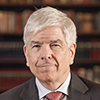
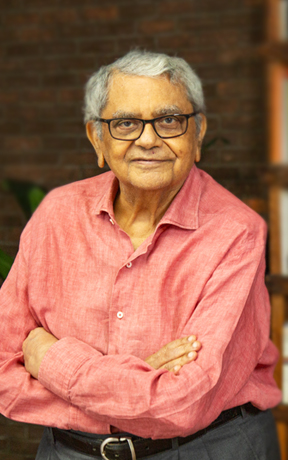
Paul Romer
The Economics of Progress
A world-renowned economist who won the Nobel Prize in Economics (2018) for the theory of endogenous growth.
Lesson Plan
- Lesson Length : 11 Lessons ㆍ 1 hours 16 miutes
- Language : 한국어, English
How humanity has advanced despite limited resources—and how it can keep going.
The renowned economist Thomas Malthus argued in his "An Essay on the Principle of Population" that because the Earth's resources are finite and the population increases exponentially, humanity will ultimately regress and suffer from severe famines. This theory has been variably adapted and still predicts a bleak future for humanity.
However, Paul Romer confidently disagrees. He believes that humanity will continue to progress as it has in the past. He cites "the discovery of ideas" as evidence, arguing that humanity can overcome the limits of resources through a variety of unprecedented ideas. He suggests that with ideas and technology, more production is possible today with the same amount of capital and labor as in the past. Romer emphasizes that for sustainable progress, a harmonious blend of scientific, market, and government systems based on honesty and trust is essential.
Discover "The Economics of Progress" as conveyed by Paul Romer, one of the most influential economists in America! What strategies should our country adopt to become a growing nation?
Full Bio
Paul Romer
- Professor at Boston College's Carroll School of Management
- Researcher at the National Bureau of Economic Research (NBER)
- Nobel Prize in Economics (2018)
- Chief Economist of the World Bank (2016-2018)
- Recktenwald Prize in Economics (2002)
Paul Romer, one of the most influential economists of this century, was awarded the Nobel Prize in Economics in 2018. Breaking away from the traditional equation of labor, capital, and land as the core drivers of economic growth, he identified technological innovation, knowledge, and ideas as the new engines of growth through his "endogenous growth theory," which has been acclaimed as opening a new chapter in modern economics.
In 2002, he received the Recktenwald Prize in Economics for his research on the 'economics of ideas' and served as the Chief Economist of the World Bank from 2016 to 2018.
Currently, he is a professor at Boston College's Carroll School of Management, one of the premier business schools in the United States, and a researcher at the National Bureau of Economic Research (NBER).
Other Series in
Economy

Service Change Notice
As of April 3, 2024, GREAT MINDS is now operated by Ubion CO LTD.
As a result, there is a change in membership, so We’re informing you.
Discontinuation of Membership Subscription Auto-Renewal
Memberships subscribed before April 3rd will not automatically renew and will expire. Therefore, if you wish to continue using the membership, please proceed with the subscription after the expiration of the subscription.Increase in Membership Subscription Prices
The prices of membership subscriptions have been increased due to rising labor and material costs. We sincerely appreciate your understanding regarding this price adjustment.| Before | After | |
|---|---|---|
| Monthly Membership | $ 4.99 | $ 9.99 |
| Annually Membership | $ 49.99 | $ 99.99 |
* The won price of the monthly/annual membership for Koreans has risen to 12,000 won and 120,000 won, respectively.
Thank you for your understanding
If you have any further inquiries, Contact Us
Service Update
Global lecture, G is becoming Grecture.
Expanded AI feature are powering the next evolution of the service.
Effective January 2, 2026
Domain: https://www.grecture.com
Automatic redirection will be provided.
Subscription:
Price changes from $9.99 to $15.
Auto-renewal will end. Please resubscribe to continue.
Thank you for being with us.