
Philosophy
Adam Smith
The Theory of Moral Sentiments
Eighteenth-century Scottish moral philosopher and economist, the defining figure of the Scottish Enlightenment.
Lesson Plan
- Lesson Length : 10 Lessons ㆍ 1 hours 58 miutes
- Language : 한국어, English
Lesson 1. The Adam Smith You Never Knew: The Theory of Moral Sentiments
FREE 12:40
People call Adam Smith 'the father of economics.' But the first book he wrote was not a work of economics. As professor of moral philosophy at the University of Glasgow, Smith spent seventeen years exploring the principles of human nature and morality before completing The Theory of Moral Sentiments. From the heart of the Scottish Enlightenment, the first lecture begins—a moral philosophy founded on sympathy.
Lesson 2. Morality Is Conceived in Sympathy
11:34
Morality is not law. Law compels from without; morality arises from within. Adam Smith asks: how do we come to understand the feelings of others? The answer is sympathy. The act of imagination by which we place ourselves in another's situation. Smith argues that this sympathy is the starting point of moral judgment, and the very basis on which human beings can live together.
Lesson 3. Only the Sentiment Proportioned to Its Cause Finds an Echo
12:08
We do not sympathize equally with every sentiment. Some we enter into readily; others we do not. What accounts for this difference? The answer is propriety. Whether a sentiment is proportioned to the cause that excited it. Sentiments that are excessive or deficient fail to win sympathy. Smith shows that this propriety is the first standard of moral judgment.
Lesson 4. Consequences Can Sway Moral Judgment
12:03
Propriety is not the only standard of moral judgment. The consequences of an action—whether it produces benefit or harm—also influence our moral evaluation. Two actions performed with the same intention may be judged entirely differently depending on their outcome. This 'irregularity of moral sentiment,' by which luck enters moral judgment, is shown by Smith to be not a flaw of human nature but a wisdom of nature.
Lesson 5. Justice Guards Society, Beneficence Cultivates It
12:23
How does sympathy operating between individuals come to form the moral foundation of society as a whole? Smith explains through two virtues: justice and beneficence. Justice is the pillar that upholds society—a negative virtue whose violation invites punishment. Beneficence is the positive virtue that cultivates and adorns society: it cannot be compelled, yet its absence leaves society barren. The tension between the two sustains the social order.
Lesson 6. The Impartial Spectator Lives Within Us
11:30
Thus far we have examined the principles by which we judge the sentiments and actions of others. But how do we judge ourselves? Smith's answer is the impartial spectator: an imagined third party who resides within us. He surveys us through the eyes of another, and judges whether our sentiments and conduct are appropriate. This inner spectator is the substance of conscience, and the core of the moral life.
Lesson 7. Conviction Is Stronger Than Reputation
11:29
To earn the approbation of the impartial spectator—self-approbation—is different from receiving the praise of others. We wish to be praised; but our deeper desire is to be praiseworthy. A life approved not by the opinion of others, but by the inner spectator. Through the case of Jean Calas, Smith demonstrates that it is the inward conviction, unmoved by unjust censure, that sustains a human being.
Lesson 8. Even the Wisest Man May Go Astray
11:53
If the impartial spectator is always within us, why do human beings still go astray? Smith's answer is self-deceit. Vanity and passion cloud the inner spectator's gaze. The tendency to admire the rich and powerful and neglect the poor, the love of luxury and ostentation: Smith dissects the mechanisms of moral corruption, and argues that tranquility of mind is the true foundation of happiness.
Lesson 9. The Invisible Hand Operates Upon the Foundation of Morality
11:24
The 'invisible hand' of The Wealth of Nations also appears in The Theory of Moral Sentiments. The paradox that the luxurious consumption of the rich unintentionally sustains the poor. But this mechanism operates only upon a moral foundation. Only in a society where the impartial spectator is alive, where justice is maintained, can the invisible hand draw out the benefit of society as a whole. Economy and morality are one.
Lesson 10. Self-Command Makes Virtues Shine
11:40
What does it mean to live well in a moral sense? Smith presents two kinds of virtue: the amiable virtues—kindness, compassion, warmth—and the respectable virtues—self-command and prudence. What makes all virtues shine is self-command. A life not enslaved to passion, but guided by the inner impartial spectator. The final lecture of The Theory of Moral Sentiments.
How a self-interested human being becomes a moral creature.
How can a self-interested human being become a moral creature? To answer this question, Adam Smith's first work, The Theory of Moral Sentiments, explores the principles of human nature. The philosophical foundation upon which The Wealth of Nations was built, it contains insights that pierce through humanity and society alike—from the principle of sympathy and the impartial spectator to the invisible hand. Known to most only as 'the father of economics,' Adam Smith speaks directly from the tiered wooden lecture hall of the University of Glasgow. Where does morality come from? What is sympathy? How can human beings live together?
Author/Advisor
Author
Adam Smith
- Born in Kirkcaldy, Scotland; Professor of Moral Philosophy at the University of Glasgow (1752–1764)
- Travelled through France as tutor to the Duke of Buccleuch (1764–1766); met Voltaire, Quesnay, Turgot and other Enlightenment thinkers
- Completed The Wealth of Nations (1776) after ten years of writing—published the same year as the American Declaration of Independence
- Served as Commissioner of Customs for Scotland (1778–1790); never married
- Major works: The Theory of Moral Sentiments (1759), The Wealth of Nations (1776)
Scottish economist and moral philosopher. His Wealth of Nations (1776) systematically argued the principles of division of labour, free markets, and capital, laying the foundation of modern economics. His insight that individual self-interest, guided by an invisible hand, produces collective benefit established the theory of free trade and ended the era of mercantilism. He is widely called the 'father of modern economics.'
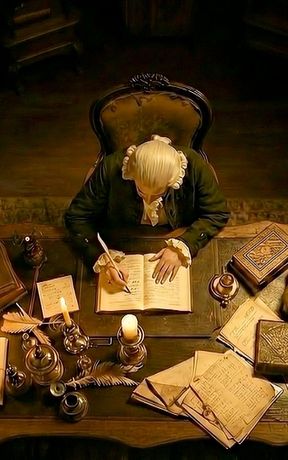
Visual Journey

The Adam Smith You Never Knew: The Theory of Moral Sentiments
People call Adam Smith 'the father of economics.' But the first book he wrote was not a work of economics. As professor of moral philosophy at the University of Glasgow, Smith spent seventeen years exploring the principles of human nature and morality before completing The Theory of Moral Sentiments. From the heart of the Scottish Enlightenment, the first lecture begins—a moral philosophy founded on sympathy.

Morality Is Conceived in Sympathy
Morality is not law. Law compels from without; morality arises from within. Adam Smith asks: how do we come to understand the feelings of others? The answer is sympathy. The act of imagination by which we place ourselves in another's situation. Smith argues that this sympathy is the starting point of moral judgment, and the very basis on which human beings can live together.

Only the Sentiment Proportioned to Its Cause Finds an Echo
We do not sympathize equally with every sentiment. Some we enter into readily; others we do not. What accounts for this difference? The answer is propriety. Whether a sentiment is proportioned to the cause that excited it. Sentiments that are excessive or deficient fail to win sympathy. Smith shows that this propriety is the first standard of moral judgment.
Consequences Can Sway Moral Judgment
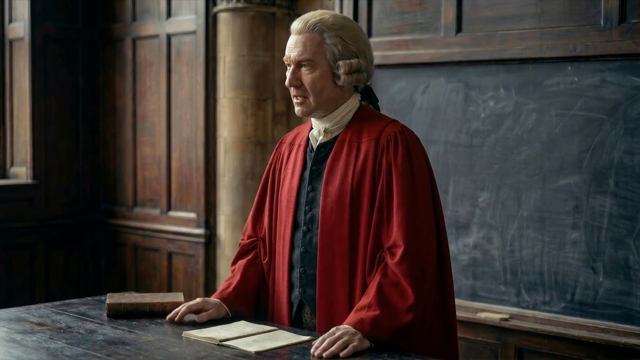
Propriety is not the only standard of moral judgment. The consequences of an action—whether it produces benefit or harm—also influence our moral evaluation. Two actions performed with the same intention may be judged entirely differently depending on their outcome. This 'irregularity of moral sentiment,' by which luck enters moral judgment, is shown by Smith to be not a flaw of human nature but a wisdom of nature.

Justice Guards Society, Beneficence Cultivates It
How does sympathy operating between individuals come to form the moral foundation of society as a whole? Smith explains through two virtues: justice and beneficence. Justice is the pillar that upholds society—a negative virtue whose violation invites punishment. Beneficence is the positive virtue that cultivates and adorns society: it cannot be compelled, yet its absence leaves society barren. The tension between the two sustains the social order.

The Impartial Spectator Lives Within Us
Thus far we have examined the principles by which we judge the sentiments and actions of others. But how do we judge ourselves? Smith's answer is the impartial spectator: an imagined third party who resides within us. He surveys us through the eyes of another, and judges whether our sentiments and conduct are appropriate. This inner spectator is the substance of conscience, and the core of the moral life.

Conviction Is Stronger Than Reputation
To earn the approbation of the impartial spectator—self-approbation—is different from receiving the praise of others. We wish to be praised; but our deeper desire is to be praiseworthy. A life approved not by the opinion of others, but by the inner spectator. Through the case of Jean Calas, Smith demonstrates that it is the inward conviction, unmoved by unjust censure, that sustains a human being.
Even the Wisest Man May Go Astray
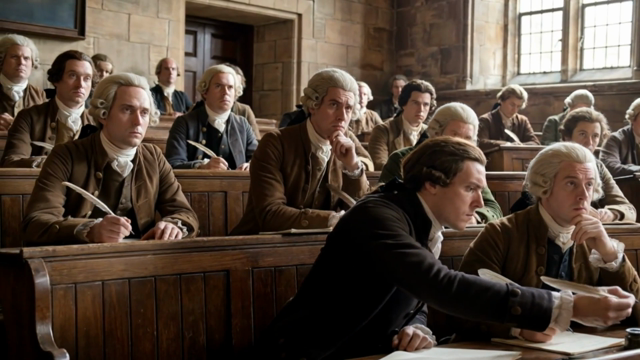
If the impartial spectator is always within us, why do human beings still go astray? Smith's answer is self-deceit. Vanity and passion cloud the inner spectator's gaze. The tendency to admire the rich and powerful and neglect the poor, the love of luxury and ostentation: Smith dissects the mechanisms of moral corruption, and argues that tranquility of mind is the true foundation of happiness.

The Invisible Hand Operates Upon the Foundation of Morality
The 'invisible hand' of The Wealth of Nations also appears in The Theory of Moral Sentiments. The paradox that the luxurious consumption of the rich unintentionally sustains the poor. But this mechanism operates only upon a moral foundation. Only in a society where the impartial spectator is alive, where justice is maintained, can the invisible hand draw out the benefit of society as a whole. Economy and morality are one.
Self-Command Makes Virtues Shine
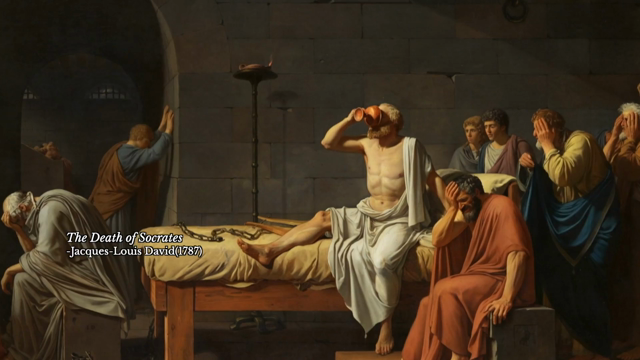
What does it mean to live well in a moral sense? Smith presents two kinds of virtue: the amiable virtues—kindness, compassion, warmth—and the respectable virtues—self-command and prudence. What makes all virtues shine is self-command. A life not enslaved to passion, but guided by the inner impartial spectator. The final lecture of The Theory of Moral Sentiments.
The Deep Insight
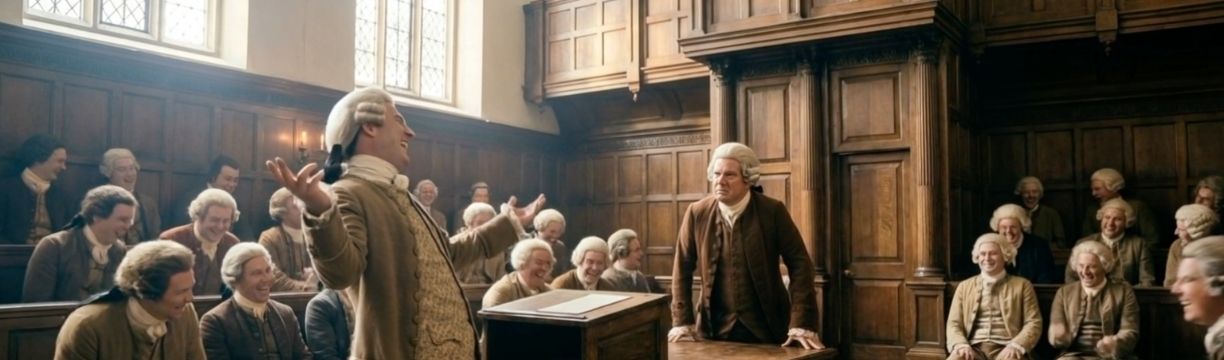
If an impartial spectator lives within you, whose judgment do you truly answer to?