

Lesson Plan
- Lesson Length : 10 Lessons ㆍ 2 hours 03 miutes
- Language : 한국어, English
Lesson 1. John Stuart Mill, On Liberty
FREE 12:24
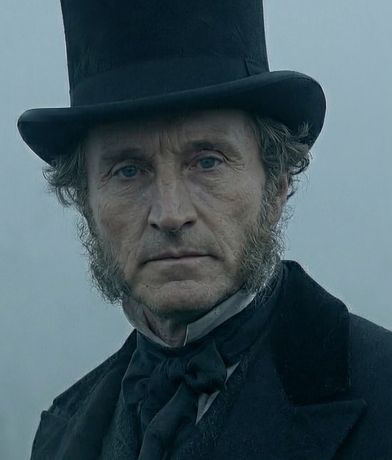
A child raised like a machine, knowing nothing of freedom. At twenty, a total mental collapse. And finally, a rebirth as the defining liberal philosopher of his age. This lecture traces Mill's radical early education, his breakdown and recovery, his twenty-one-year intellectual friendship with Harriet Taylor, and the creation of On Liberty.
Lesson 2. When Can Society Restrict Individual Freedom?
12:25
The starting point of On Liberty: the Harm Principle. Mill argues that individual freedom must be guaranteed absolutely so long as no harm is done to others—and explains why the pressure of public opinion and custom can be far more suffocating than any law.
Lesson 3. How Far Should Individual Liberty Extend?
12:17
"Over himself, over his own body and mind, the individual is sovereign." This lecture examines the precise boundaries of individual sovereignty as Mill defined them—and explores how to distinguish between actions that affect only oneself and those that affect others.
Lesson 4. Why Must All Opinions Be Freely Expressed?
12:24
"If all mankind minus one were of one opinion, mankind would be no more justified in silencing that one person." Mill unfolds three arguments for why freedom of expression must be protected absolutely—without exception.
Lesson 5. Should Even Erroneous Opinions Be Protected?
12:26
Must freedom of expression be guaranteed even to opinions that are plainly wrong? Mill answers through four distinct cases—revealing the paradoxical insight that even error can sharpen and strengthen truth.
Lesson 6. Why Is Individuality Good for the Individual?
12:26
In a Victorian society where uniformity was prized as a virtue, Mill argues that individuality—living differently from one another—is essential to a fully human life. Being different from others is not a flaw, but the source of human vitality.
Lesson 7. Why Does Society Need Diversity?
12:22
What does individuality mean at the level of society? Won't a society where everyone lives their own way collapse into chaos? Mill argues that diversity is not a threat to social order—it is the very condition for progress and advancement.
Lesson 8. When Does the Opinion of the Majority Become Tyranny?
12:16
Freedom is blocked not only by law and the state. Have you ever censored yourself—not because you broke any law, but simply out of fear of others' judgment? Mill warns that this is the real threat: the tyranny of the majority, invisible yet far more pervasive than any government.
Lesson 9. How Does Custom Become Despotism?
12:24
The deepest, quietest form of the tyranny of the majority is custom. "The despotism of custom is everywhere the standing hindrance to human advancement." This lecture follows Mill's reasoning for why custom is more dangerous than any law.
Lesson 10. How Should the Principle of Liberty Be Applied?
12:13
The Harm Principle, freedom of expression, the tyranny of the majority, individuality and diversity. In this final lecture, all the principles of On Liberty are brought to bear on concrete, real-world cases. After 160 years, what is Mill's On Liberty still asking of us?
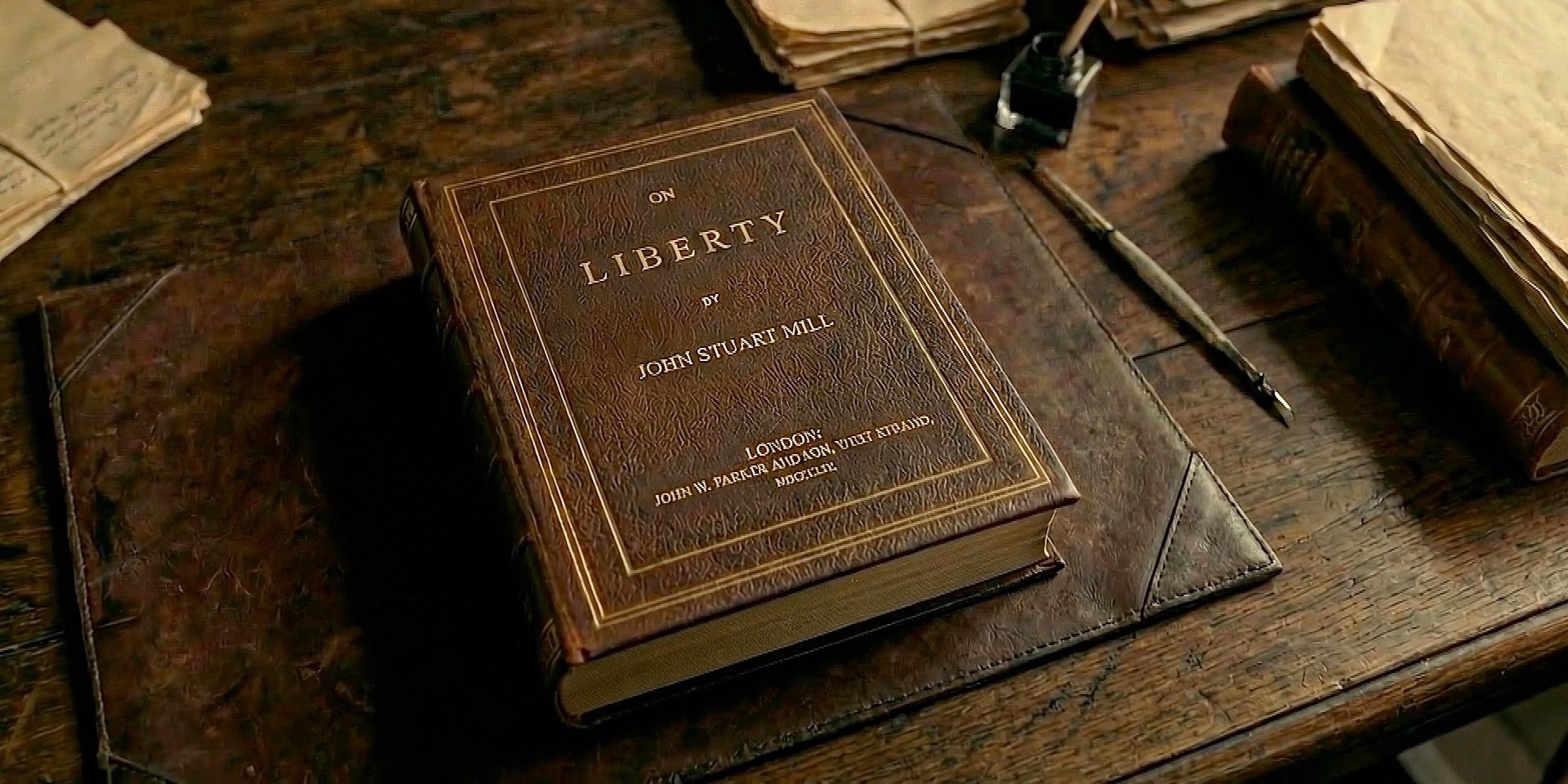
"What is freedom, and where does it end?" The question John Stuart Mill posed in On Liberty more than 160 years ago remains as urgent as ever in an age riven by debates over hate speech, censorship, and the limits of expression. In this series, Mill himself presents the foundational text of modern liberalism—one that confronts head-on the conditions under which freedom may be restricted and the sovereignty of the individual asserted. Across ten lectures, he unfolds the Harm Principle, the freedom of thought and discussion, the value of individuality, and the tyranny that public opinion and custom can exercise—a tyranny, he argues, more dangerous than any law.
Author/Advisor
Author
John Stuart Mill
- - Philosopher, economist, and politician, the foremost intellectual of 19th-century Britain
- - Raised under an extreme early education regime: Greek from age three, Latin from age eight
- - Worked at the East India Company (1823–1858); served as Member of Parliament for Westminster (1865–1868)
- - The first MP to introduce a bill for women's suffrage in Parliament
- - Major works: A System of Logic (1843), Principles of Political Economy (1848), On Liberty (1859), Utilitarianism (1861), The Subjection of Women (1869)
A 19th-century British philosopher and economist who
inherited and advanced utilitarianism to complete the philosophy of modern
liberalism. Through On Liberty, which systematically argued for individual
freedom against the tyranny of the majority, Utilitarianism, which completed
utilitarian theory by distinguishing the quality of pleasures, and The
Subjection of Women, which championed women's rights, Mill made a decisive
contribution to shaping the core values of democracy and human rights as we
know them today. He is often called the "Saint of Liberalism."
Visual Journey
John Stuart Mill, On Liberty
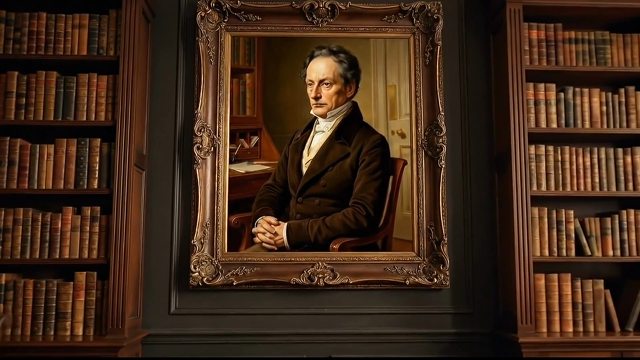
A child raised like a machine, knowing nothing of freedom. At twenty, a total mental collapse. And finally, a rebirth as the defining liberal philosopher of his age. This lecture traces Mill's radical early education, his breakdown and recovery, his twenty-one-year intellectual friendship with Harriet Taylor, and the creation of On Liberty.

When Can Society Restrict Individual Freedom?
The starting point of On Liberty: the Harm Principle. Mill argues that individual freedom must be guaranteed absolutely so long as no harm is done to others—and explains why the pressure of public opinion and custom can be far more suffocating than any law.

How Far Should Individual Liberty Extend?
"Over himself, over his own body and mind, the individual is sovereign." This lecture examines the precise boundaries of individual sovereignty as Mill defined them—and explores how to distinguish between actions that affect only oneself and those that affect others.

Why Must All Opinions Be Freely Expressed?
"If all mankind minus one were of one opinion, mankind would be no more justified in silencing that one person." Mill unfolds three arguments for why freedom of expression must be protected absolutely—without exception.
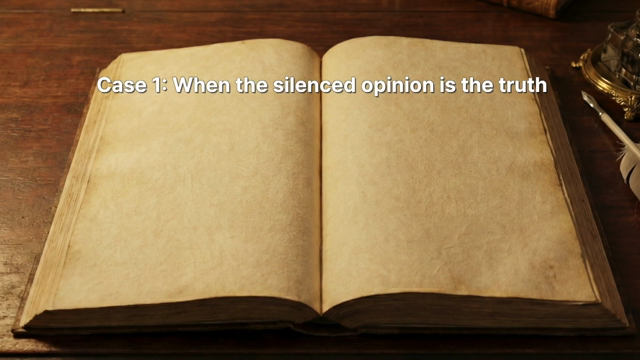
Should Even Erroneous Opinions Be Protected?
Must freedom of expression be guaranteed even to opinions that are plainly wrong? Mill answers through four distinct cases—revealing the paradoxical insight that even error can sharpen and strengthen truth.

Why Is Individuality Good for the Individual?
In a Victorian society where uniformity was prized as a virtue, Mill argues that individuality—living differently from one another—is essential to a fully human life. Being different from others is not a flaw, but the source of human vitality.

Why Does Society Need Diversity?
What does individuality mean at the level of society? Won't a society where everyone lives their own way collapse into chaos? Mill argues that diversity is not a threat to social order—it is the very condition for progress and advancement.

When Does the Opinion of the Majority Become Tyranny?
Freedom is blocked not only by law and the state. Have you ever censored yourself—not because you broke any law, but simply out of fear of others' judgment? Mill warns that this is the real threat: the tyranny of the majority, invisible yet far more pervasive than any government.

How Does Custom Become Despotism?
The deepest, quietest form of the tyranny of the majority is custom. "The despotism of custom is everywhere the standing hindrance to human advancement." This lecture follows Mill's reasoning for why custom is more dangerous than any law.

How Should the Principle of Liberty Be Applied?
The Harm Principle, freedom of expression, the tyranny of the majority, individuality and diversity. In this final lecture, all the principles of On Liberty are brought to bear on concrete, real-world cases. After 160 years, what is Mill's On Liberty still asking of us?
The Deep Insight
Next Chapter

Service Change Notice
As of April 3, 2024, GREAT MINDS is now operated by Ubion CO LTD.
As a result, there is a change in membership, so We’re informing you.
Discontinuation of Membership Subscription Auto-Renewal
Memberships subscribed before April 3rd will not automatically renew and will expire. Therefore, if you wish to continue using the membership, please proceed with the subscription after the expiration of the subscription.Increase in Membership Subscription Prices
The prices of membership subscriptions have been increased due to rising labor and material costs. We sincerely appreciate your understanding regarding this price adjustment.| Before | After | |
|---|---|---|
| Monthly Membership | $ 4.99 | $ 9.99 |
| Annually Membership | $ 49.99 | $ 99.99 |
* The won price of the monthly/annual membership for Koreans has risen to 12,000 won and 120,000 won, respectively.
Thank you for your understanding
If you have any further inquiries, Contact Us
Service Update
Global lecture, G is becoming Grecture.
Expanded AI feature are powering the next evolution of the service.
Effective January 2, 2026
Domain: https://www.grecture.com
Automatic redirection will be provided.
Subscription:
Price changes from $9.99 to $15.
Auto-renewal will end. Please resubscribe to continue.
Thank you for being with us.