Art
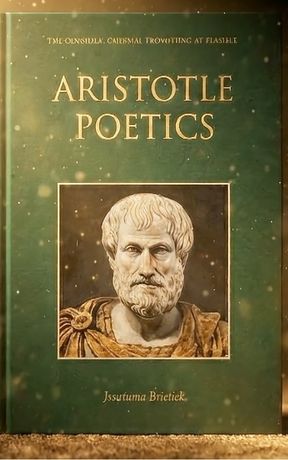
Aristotle
Poetics
Ancient Greek philosopher, Plato's student and tutor to Alexander the Great.
Lesson Plan
- Lesson Length : 10 Lessons ㆍ 1 hours 59 miutes
- Language : 한국어, English
Lesson 1. Aristotle: Truth Over Teacher
FREE 12:48
Socrates, Plato, Aristotle: the most illustrious intellectual lineage in human history. Yet the young Aristotle, who crossed to Athens at seventeen, ultimately broke with his teacher Plato. 'Plato is my friend, but truth is a dearer friend.' Against Plato, who condemned art as falsehood and corruption and banished it from the philosopher-king's republic, Aristotle set out through the Poetics to prove that art has a reason to exist.
Lesson 2. Why We Are Drawn to Mimesis
11:55
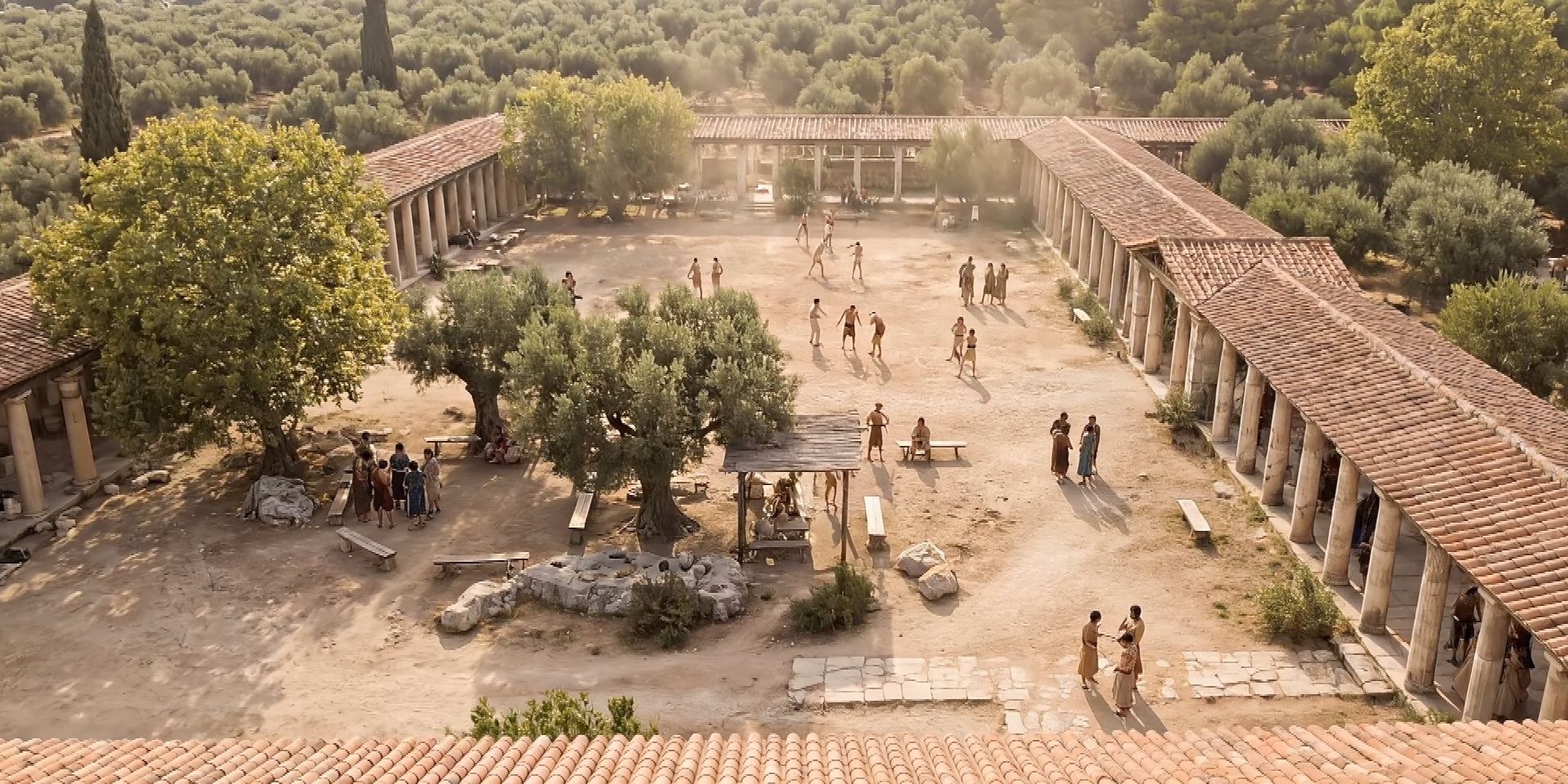
Plato said art is dangerous precisely because it is mimesis. Aristotle answers with the opposite: mimesis is a human instinct, and therefore art is justified. Children learn through imitation, and take pleasure in accomplished imitation. Walking the promenade of the Lyceum in Athens, Aristotle explains why human beings are instinctively drawn to stories. The starting point of the Poetics.
Lesson 3. No Plot, No Tragedy
11:21
Of the six elements of tragedy, which is the most important? Aristotle's answer is unambiguous: plot---mythos. It is action, not character, that is the soul of tragedy. A well-constructed plot has a beginning, a middle, and an end, and imitates a single complete action. From Netflix dramas to Hollywood blockbusters, the principle Aristotle defined 2,300 years ago remains alive today.
Lesson 4. Why Poetry Is More Philosophical than History
11:21
History records what actually happened. Poetry depicts what could happen. Aristotle declares: poetry is more philosophical than history. History deals with particular facts; poetry with universal truths. Oedipus was not a real person, yet his story contains the most universal truths about human fate. The paradox that fiction can be more truthful than non-fiction.
Lesson 5. The Art of Shocking Reversals and Recognition
12:14
Two devices that make the heartbeat of a perfect plot: peripeteia---reversal---and anagnorisis---recognition. Reversal is the moment when an action leads to the opposite of what was intended. Recognition is the moment of transition from ignorance to knowledge. When Oedipus comes to know the truth, both happen simultaneously. Aristotle's account of the structural principle that makes stories most intense.
Lesson 6. The Seed of Ruin: Hamartia
11:21
What kind of person should the protagonist of a tragedy be? The downfall of the purely good man produces only shock; the downfall of the purely wicked, only satisfaction. Neither is tragedy. The ideal tragic protagonist, as Aristotle defines it, is a person with hamartia---an error of judgment, a flaw. A human being who is good but not perfect. Oedipus, Hamlet, Macbeth: the secret shared by all great tragic protagonists.
Lesson 7. The Secret to Catharsis
12:14
The most famous and most contested concept in the Poetics: catharsis. Tragedy effects a catharsis of pity and fear. But not every tragedy delivers catharsis. A weak plot concealed behind expensive stage machinery and spectacular effects produces none. Pity and fear must arise from the structure of the plot itself, from the necessity of the story---not from the spectacle.
Lesson 8. Metaphor Cannot Be Taught
11:56
Aristotle declares: 'The greatest thing by far is to be a master of metaphor. It is the one thing that cannot be learnt from others.' Metaphor is the capacity to intuitively perceive resemblance between different things. The excellence of style, the power of language. Brilliant language arises from the subtle mixture of the familiar and the strange. From Homer to Shakespeare, every great writer has been a master of metaphor.
Lesson 9. How Art Tells the Perfect Lie
11:52
Lesson 10. How to Tame the Wild Horses
12:15
The final lecture. The one question that runs through the entire Poetics: what does art do to human beings? Plato feared that art stimulates emotion and paralyzes reason. Aristotle answers: by taming the wild horses of pity and fear, tragedy makes human beings more whole, not less. Catharsis is not the discharge of emotion but the education of emotion. The final message of the Poetics—2,300 years on.
The first work of criticism, and the blueprint of how we tell stories today.
The first work of criticism in human history: against his teacher Plato's banishment of art, Aristotle proved through mimesis and catharsis that literature has a reason to exist. This series traces how lecture notes written 2,300 years ago became the immortal blueprint of the modern Hollywood screenplay and dramatic writing the world over. Plot, reversal, hamartia, metaphor, catharsis—the concepts of the Poetics are the foundations of how we make and consume stories today. Aristotle speaks directly, from the promenade of the Lyceum in Athens.
Author/Advisor
Author
Aristotle
- Born in Stageira, Macedonia (384 BC). Crossed to Athens at seventeen; studied at Plato's Academy for twenty years
- In 343 BC, invited by King Philip II of Macedon to become tutor to the prince Alexander---later Alexander the Great
- Returned to Athens in 335 BC and founded the Lyceum. His practice of teaching while walking with students gave rise to the name 'Peripatetics'
- After Alexander's death (323 BC), as anti-Macedonian sentiment rose in Athens, he fled to Chalcis---'so that Athens might not sin against philosophy a second time.' He died the following year
- Major works: Poetics, Nicomachean Ethics, Politics, Metaphysics, Rhetoric---an enormous body of writing spanning logic, philosophy, science, and the arts
Ancient Greek philosopher and 'father of all knowledge.' He crossed to Athens at seventeen and spent twenty years as Plato's student, before establishing his own independent school of thought. As tutor to Alexander the Great, the conqueror, he demonstrated in practice how the power of story shapes a ruler. Though an outsider who never truly belonged to the Athenian mainstream, he preserved the Poetics—the intellectual heritage of humanity—against threats to his life, and passed it on to posterity.
Visual Journey
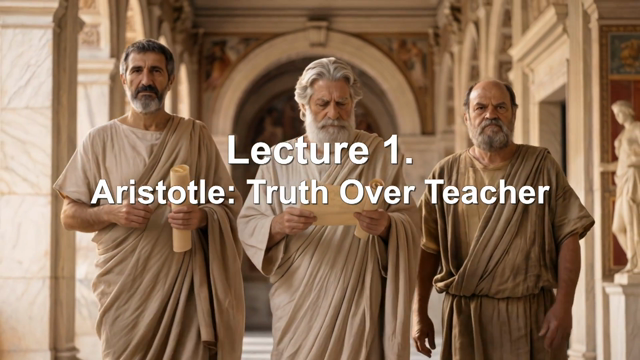
Aristotle: Truth Over Teacher
Socrates, Plato, Aristotle: the most illustrious intellectual lineage in human history. Yet the young Aristotle, who crossed to Athens at seventeen, ultimately broke with his teacher Plato. 'Plato is my friend, but truth is a dearer friend.' Against Plato, who condemned art as falsehood and corruption and banished it from the philosopher-king's republic, Aristotle set out through the Poetics to prove that art has a reason to exist.
Why We Are Drawn to Mimesis
Plato said art is dangerous precisely because it is mimesis. Aristotle answers with the opposite: mimesis is a human instinct, and therefore art is justified. Children learn through imitation, and take pleasure in accomplished imitation. Walking the promenade of the Lyceum in Athens, Aristotle explains why human beings are instinctively drawn to stories. The starting point of the Poetics.
No Plot, No Tragedy
Of the six elements of tragedy, which is the most important? Aristotle's answer is unambiguous: plot---mythos. It is action, not character, that is the soul of tragedy. A well-constructed plot has a beginning, a middle, and an end, and imitates a single complete action. From Netflix dramas to Hollywood blockbusters, the principle Aristotle defined 2,300 years ago remains alive today.
Why Poetry Is More Philosophical than History
History records what actually happened. Poetry depicts what could happen. Aristotle declares: poetry is more philosophical than history. History deals with particular facts; poetry with universal truths. Oedipus was not a real person, yet his story contains the most universal truths about human fate. The paradox that fiction can be more truthful than non-fiction.
The Art of Shocking Reversals and Recognition
Two devices that make the heartbeat of a perfect plot: peripeteia---reversal---and anagnorisis---recognition. Reversal is the moment when an action leads to the opposite of what was intended. Recognition is the moment of transition from ignorance to knowledge. When Oedipus comes to know the truth, both happen simultaneously. Aristotle's account of the structural principle that makes stories most intense.
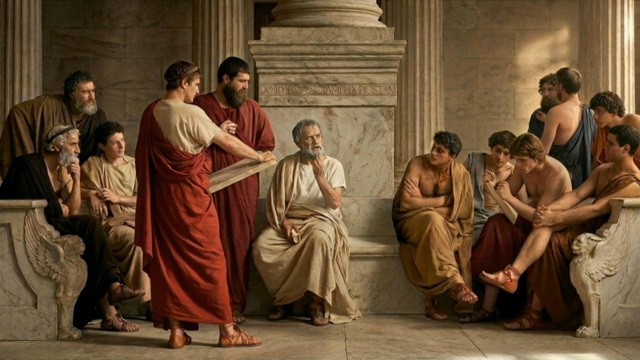
The Seed of Ruin: Hamartia
What kind of person should the protagonist of a tragedy be? The downfall of the purely good man produces only shock; the downfall of the purely wicked, only satisfaction. Neither is tragedy. The ideal tragic protagonist, as Aristotle defines it, is a person with hamartia---an error of judgment, a flaw. A human being who is good but not perfect. Oedipus, Hamlet, Macbeth: the secret shared by all great tragic protagonists.
The Secret to Catharsis
The most famous and most contested concept in the Poetics: catharsis. Tragedy effects a catharsis of pity and fear. But not every tragedy delivers catharsis. A weak plot concealed behind expensive stage machinery and spectacular effects produces none. Pity and fear must arise from the structure of the plot itself, from the necessity of the story---not from the spectacle.
Metaphor Cannot Be Taught
Aristotle declares: 'The greatest thing by far is to be a master of metaphor. It is the one thing that cannot be learnt from others.' Metaphor is the capacity to intuitively perceive resemblance between different things. The excellence of style, the power of language. Brilliant language arises from the subtle mixture of the familiar and the strange. From Homer to Shakespeare, every great writer has been a master of metaphor.
How Art Tells the Perfect Lie
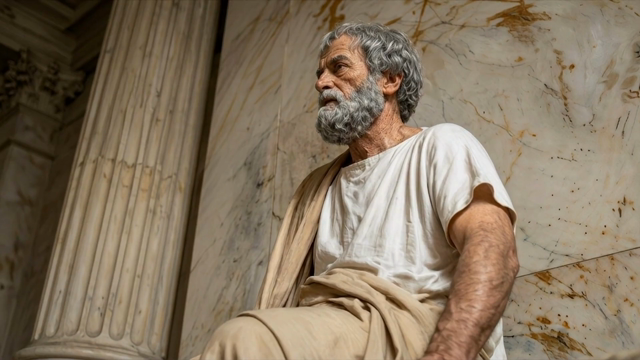
How to Tame the Wild Horses
The final lecture. The one question that runs through the entire Poetics: what does art do to human beings? Plato feared that art stimulates emotion and paralyzes reason. Aristotle answers: by taming the wild horses of pity and fear, tragedy makes human beings more whole, not less. Catharsis is not the discharge of emotion but the education of emotion. The final message of the Poetics—2,300 years on.
The Deep Insight
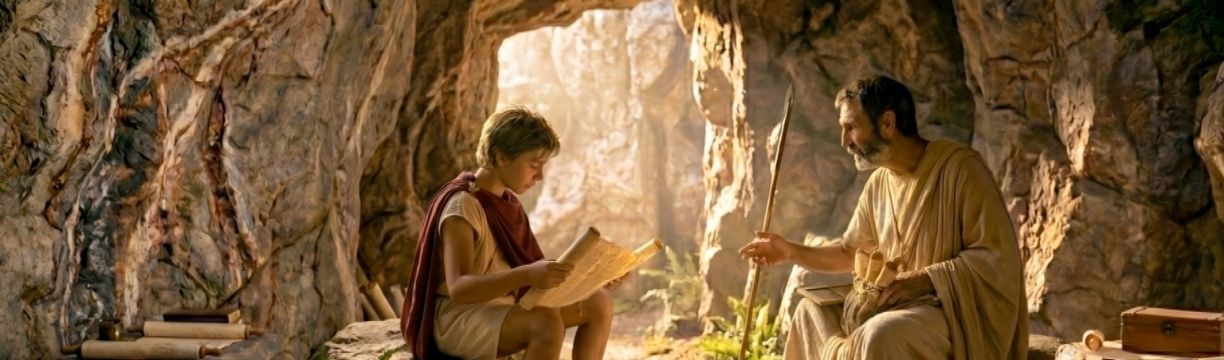
Why can a story that never happened tell more truth than history?