

Psychology
Sigmund Freud
The Interpretation of Dreams
Austrian neurologist and founder of psychoanalysis who dissected the unconscious mind.
Lesson Plan
- Lesson Length : 10 Lessons ㆍ 2 hours 02 miutes
- Language : 한국어, English
Lesson 1. Freud's Couch
FREE 12:53
At the centre of a study crowded with ancient antiquities, upon a Persian rug, a couch. Freud speaks: rest your head upon the pillow, stretch your legs out, close your eyes. How and where was The Interpretation of Dreams born? The record of the most revolutionary act of self-analysis in human history. The journey by which Freud, interpreting his own dreams, discovered the royal road to the unconscious.
Lesson 2. Nothing Is Just a Dream
12:19
Vienna, 1900. Freud published The Interpretation of Dreams. In an age that dismissed dreams as mystical revelation or physiological noise, he declared: dreams are meaningful. The dream is the way in which a repressed wish emerges from the unconscious, evading the censor. The difference between manifest and latent content, the method of free association, and the starting point of his revolutionary insight: the royal road to the unconscious.
Lesson 3. Rebus: The Dream Beneath the Dream
12:18
The dream is like a rebus: a puzzle that mixes letters and pictures to produce something entirely different. The scenes we remember on waking are the manifest dream. Beneath them lie the latent dream-thoughts. Freud's own dream of Irma's injection: how the interpretation of this dream became the cornerstone of psychoanalysis. Tracing the dream-work that transforms latent thoughts into manifest content.
Lesson 4. Children's Dreams: Before the Censor Wakes
11:25
The adult dream is complex and distorted. The child's dream is not. Children's dreams are transparent: wish appears undisguised, without repression, censorship, or disguise. Freud argues that the child's dream is the theoretical key to all dreaming. Understand the simple mechanism of wish-fulfilment, and the most twisted adult dream becomes decipherable. Why the dream is the guardian of sleep.
Lesson 5. Censorship: Truth Behind the Scenes
12:10
Why does the adult dream not speak its truth directly? Every night we take to a stage of our own mind's making—yet we have no idea what is being performed. Because censorship distorts and disguises the repressed wish. Dream-distortion, compromise formation, affective transformation: Freud dissects how the repressed wish disguises itself in order to pass the censor.
Lesson 6. The Grammar of the Dream
12:18
The dream does not speak its truth directly. To evade censorship, it employs an entirely different language: the symbol. Freud argues that the dream has a fixed system of symbolism. Staircases, kings and queens, hats, water: what these symbols mean. How free association and symbolic interpretation work together to decode the grammar of the dream. Understand the way a dream speaks, and you can hear what it says.
Lesson 7. The Knot in the Dream: Condensation and Overdetermination
11:59
The dream appears brief and meagre. Analysis reveals the opposite. The dream is not meagre—it is compressed. Behind a single brief scene, a single word, a single face, an entire network of associations unfolds. Condensation and overdetermination: the mechanism by which dream-work transforms vast latent content into compressed manifest dream. The case of the smoked salmon dream.
Lesson 8. The Dream Moves the Weight
12:18
In the dream, what is most emotionally significant is displaced to the margins. Displacement: the mechanism by which the unconscious shifts emotional weight elsewhere entirely. The absurdity within the dream, the dream of the 1-florin-50-kreuzer ticket, and the way secondary elaboration clothes the dream in a semblance of logical surface. Freud explains why dreams feel so strange upon waking.
Lesson 9. The Child Within the Adult: Childhood Omnipotence and Wish-Fulfilment
12:18
The adult dreams the child's dream. Emotions one thought were long since healed, rivalries believed buried by time, wishes that could never be spoken aloud: these return in the dream of the night, vivid and unmistakable. Infantile impulse, omnipotence, the repressed wish. Freud's central insight: behind every complex adult dream, a childhood desire is always hidden.
Lesson 10. The Wish That Would Not Be Denied: The Dream Is the Fulfilment of a Wish
12:18
The sentence in Freud's theory that is challenged more than any other: 'The dream is the fulfilment of a wish.' How does he account for anxiety dreams, nightmares, punishment dreams? The father who dreams of his burning child. The examination anxiety dream. Freud argues that it is the wish that would not be denied that makes the dream. The final lecture of The Interpretation of Dreams, and the completion of the revolutionary concept of the unconscious.
The royal road to the unconscious, and the bible of psychoanalysis.
The starting point of modern psychology and still called the 'bible' of psychoanalysis, The Interpretation of Dreams challenged the prevailing dismissal of dreams as mere physiological residue or mystical revelation, and dissected the unconscious—the deepest abyss of the human mind. Through the insight that the dream is the royal road to the unconscious, it demonstrated how repressed wishes, passing through censorship and distortion, emerge as symbolic scenes, and in doing so laid the foundations of modern anthropology. In the twenty-first century, when data and AI predict human behaviour, this classic asks again: what is the nature of the true self hidden beyond the fragmented image, and what are its most intimate desires?
Author/Advisor
Author
Sigmund Freud
- Born in Freiberg, Moravia (1856, present-day Příbor, Czech Republic). Moved to Vienna in 1860; graduated from the medical faculty of the University of Vienna (1881)
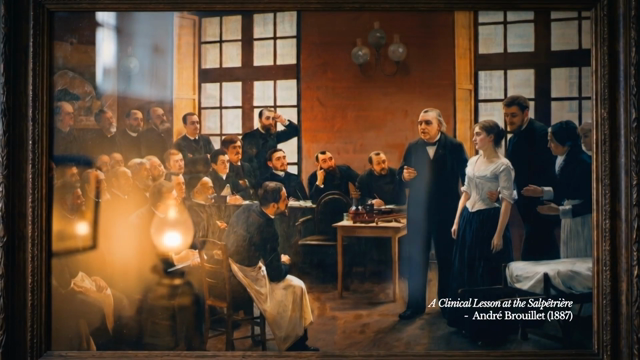
- Studied hysteria under Charcot at the Salpêtrière in Paris (1885–1886). On returning to Vienna, collaborated with Josef Breuer to lay the foundations of psychoanalysis
- Published The Interpretation of Dreams (1900). Followed by Introductory Lectures on Psycho-Analysis (1917), Beyond the Pleasure Principle (1920), The Ego and the Id (1923), and other central works of psychoanalysis
- After the Nazi annexation of Austria (1938), fled to London, where he died the following year (1939)
- Major works: The Interpretation of Dreams (1900), Introductory Lectures on Psycho-Analysis (1917), Beyond the Pleasure Principle (1920), The Ego and the Id (1923), Civilisation and Its Discontents (1930)
Austrian neurologist and founder of psychoanalysis. Through The Interpretation of Dreams and Introductory Lectures on Psycho-Analysis, he sought to understand within a single system the unconscious hidden beneath human consciousness, the drives, and the dynamics of repression. By theorising through dream analysis and free association how intimate human desires and psychological conflicts form character and behaviour, he established an enormous intellectual foundation for modern psychology and psychiatry, and for the humanities and arts of the twentieth century as a whole. He is still called 'the father of psychoanalysis.'
Visual Journey
Freud's Couch
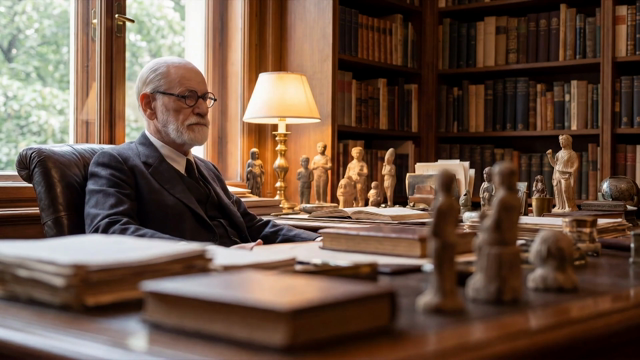
At the centre of a study crowded with ancient antiquities, upon a Persian rug, a couch. Freud speaks: rest your head upon the pillow, stretch your legs out, close your eyes. How and where was The Interpretation of Dreams born? The record of the most revolutionary act of self-analysis in human history. The journey by which Freud, interpreting his own dreams, discovered the royal road to the unconscious.
Nothing Is Just a Dream
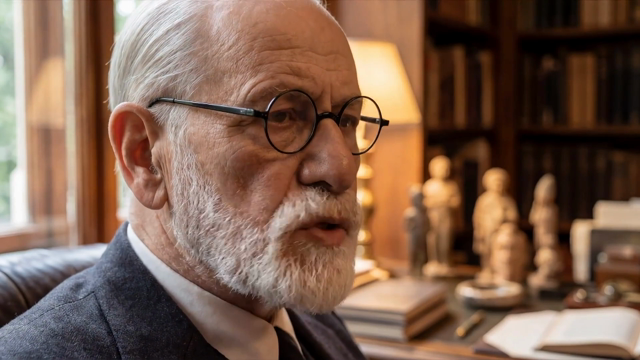
Vienna, 1900. Freud published The Interpretation of Dreams. In an age that dismissed dreams as mystical revelation or physiological noise, he declared: dreams are meaningful. The dream is the way in which a repressed wish emerges from the unconscious, evading the censor. The difference between manifest and latent content, the method of free association, and the starting point of his revolutionary insight: the royal road to the unconscious.
Rebus: The Dream Beneath the Dream
The dream is like a rebus: a puzzle that mixes letters and pictures to produce something entirely different. The scenes we remember on waking are the manifest dream. Beneath them lie the latent dream-thoughts. Freud's own dream of Irma's injection: how the interpretation of this dream became the cornerstone of psychoanalysis. Tracing the dream-work that transforms latent thoughts into manifest content.
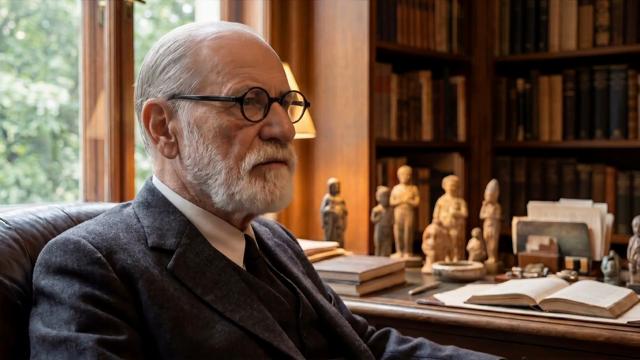
Children's Dreams: Before the Censor Wakes
The adult dream is complex and distorted. The child's dream is not. Children's dreams are transparent: wish appears undisguised, without repression, censorship, or disguise. Freud argues that the child's dream is the theoretical key to all dreaming. Understand the simple mechanism of wish-fulfilment, and the most twisted adult dream becomes decipherable. Why the dream is the guardian of sleep.
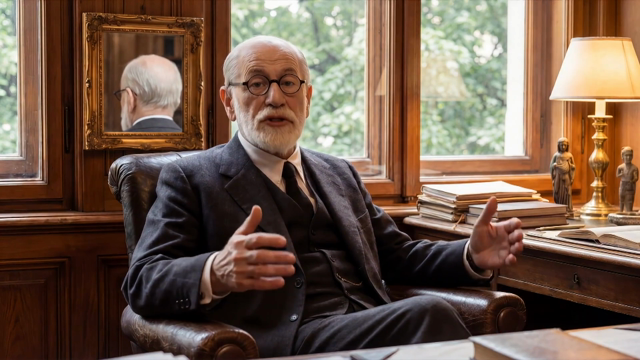
Censorship: Truth Behind the Scenes
Why does the adult dream not speak its truth directly? Every night we take to a stage of our own mind's making—yet we have no idea what is being performed. Because censorship distorts and disguises the repressed wish. Dream-distortion, compromise formation, affective transformation: Freud dissects how the repressed wish disguises itself in order to pass the censor.
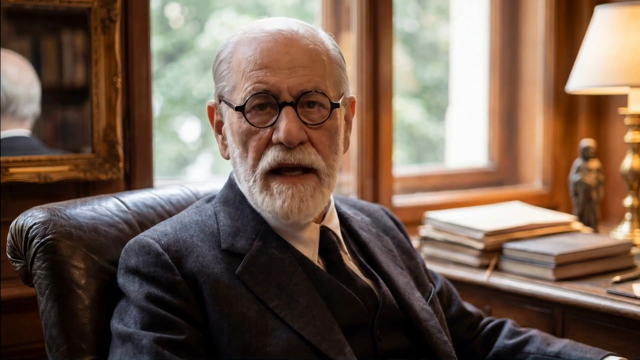
The Grammar of the Dream
The dream does not speak its truth directly. To evade censorship, it employs an entirely different language: the symbol. Freud argues that the dream has a fixed system of symbolism. Staircases, kings and queens, hats, water: what these symbols mean. How free association and symbolic interpretation work together to decode the grammar of the dream. Understand the way a dream speaks, and you can hear what it says.
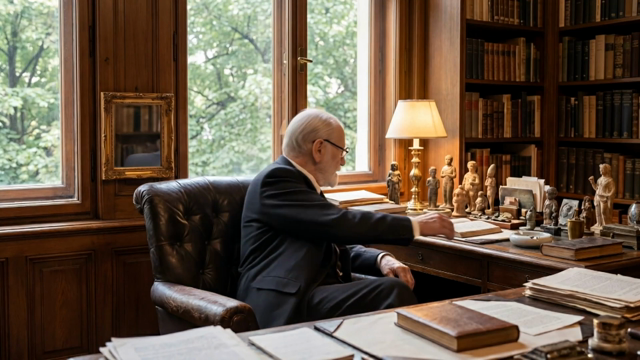
The Knot in the Dream: Condensation and Overdetermination
The dream appears brief and meagre. Analysis reveals the opposite. The dream is not meagre—it is compressed. Behind a single brief scene, a single word, a single face, an entire network of associations unfolds. Condensation and overdetermination: the mechanism by which dream-work transforms vast latent content into compressed manifest dream. The case of the smoked salmon dream.
The Dream Moves the Weight
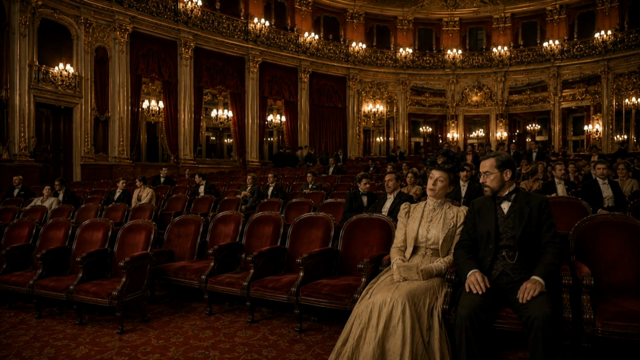
In the dream, what is most emotionally significant is displaced to the margins. Displacement: the mechanism by which the unconscious shifts emotional weight elsewhere entirely. The absurdity within the dream, the dream of the 1-florin-50-kreuzer ticket, and the way secondary elaboration clothes the dream in a semblance of logical surface. Freud explains why dreams feel so strange upon waking.
The Child Within the Adult: Childhood Omnipotence and Wish-Fulfilment
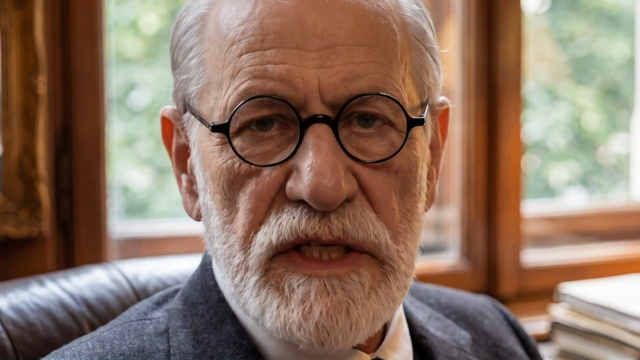
The adult dreams the child's dream. Emotions one thought were long since healed, rivalries believed buried by time, wishes that could never be spoken aloud: these return in the dream of the night, vivid and unmistakable. Infantile impulse, omnipotence, the repressed wish. Freud's central insight: behind every complex adult dream, a childhood desire is always hidden.
The Wish That Would Not Be Denied: The Dream Is the Fulfilment of a Wish
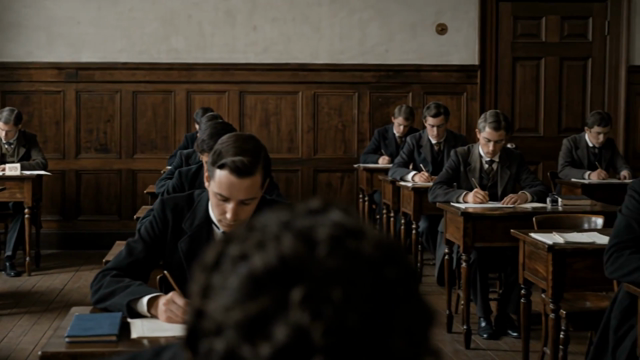
The sentence in Freud's theory that is challenged more than any other: 'The dream is the fulfilment of a wish.' How does he account for anxiety dreams, nightmares, punishment dreams? The father who dreams of his burning child. The examination anxiety dream. Freud argues that it is the wish that would not be denied that makes the dream. The final lecture of The Interpretation of Dreams, and the completion of the revolutionary concept of the unconscious.
The Deep Insight

If every dream hides a wish, what are you hiding from yourself?